
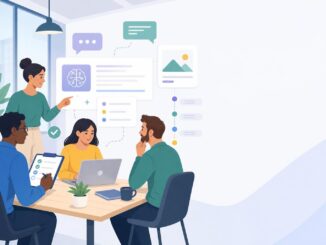
How to Set Up an AI Content Approval Workflow for Small Teams
Step-by-step playbook to design an AI content approval workflow: define risk tiers, human checks, lightweight gates, logging, quality metrics, and templates.
Step-by-step playbook to design an AI content approval workflow: define risk tiers, human checks, lightweight gates, logging, quality metrics, and templates.

Practical checklist to audit an AI vendor’s copyright and content-reuse risk. Key questions, evidence to request, quick tests, red flags, and next steps.

Step-by-step no-code guide to prototype a managed agent with clear tasks, human-review checkpoints, permission limits, test flows, prompts, and audit logs.

Eight practical, ready-to-run classroom activities that teach teens how to spot AI errors, protect privacy, evaluate sources, use AI responsibly, and set guardrails.

Step-by-step playbook to run a lightweight internal AI red team: scope, prioritized test cases, ready-to-run prompts, severity scoring, reporting, and remediation.

Step-by-step playbook for small teams to design dependable AI agent workflows: define scope, choose managed vs hosted, add human checkpoints, logging, safety, and rollout.

A practical, reproducible rubric and small test suite to evaluate AI content tools. Includes prompts, scoring, automation recipes, decision matrix, and limits.

A practical playbook to manage LLM costs in production: choose models wisely, cut tokens, batch and cache calls, use retrieval over generation, and estimate spend.

Step-by-step guide to build an AI moderation workflow for UGC: policy tiers, triage rules, AI filters, human review, testing checklist, and vendor checklist.

A hands-on checklist to reduce hallucinations in retrieval-augmented generation (RAG), with concrete prevention steps, reproducible tests, code/no-code examples, and onboarding tips.
Copyright © 2026 | WordPress Theme by MH Themes